Showing posts with label phony. Show all posts

Thursday, November 8, 2012

On Being Quiet: Part 2


  Western culture rewards extroverted behavior--assertive, overbearing at times, jovial, bubbly. When I was kid, everyone commented how smart I was and how great it was that I liked reading a book and drawing when I didn't have any other kids to play with. As I got older, I was pigeon-holed for being too shy, too quiet, and too antisocial. I still made friends. But I didn't have as many friends because I wasn't really shiny and bubbly. I didn't make the first move in the conversation. I didn't like to crack jokes or put myself on display so that others would see how funny I was. You don't get me until you get to know a little better.
    At work, being a person at the point of sale at the cash register and being the receptionist answering the phone and greeting people at the front desk, I also was criticized (albeit more politely and constructively) for being too quiet. Now I know, maybe I shouldn't be in a job where I have to answer the phone or greet people. It isn't that I'm unfriendly, I'm just shy about it.Yes, still. even when it's my job not to be, it's still difficult to pretend to be happy to see a customer or a client when it really doesn't make a difference to me personally if they are there or not. It's not like I worked on commission or like I knew them all really well.
    The last thing I am is phony, which is probably a big reason why I am not very good at small talk with strangers or greeting customers. I am focused on my other tasks and my own thoughts and projects, and having to put on this happy face feels false to me. Some people consider it just being friendly, but I draw a line between what I consider friendly and what I would consider going overboard with vivacity, for me anyway. I will smile and say hello, friendly enough for me, but I'm not going to strike up a conversation about your kids or the weather or the basketball game last night (overly vivacious).
    All this time, I've felt like there was something wrong with me because I wasn't bubbly and giggly and super-friendly and didn't like parties or participating in class or meetings when I didn't have anything constructive to add. Now I realize that there's nothing wrong with me for being that way. It's just how I'm wired, genetically and through my upbringing, and I don't see why I should be forced to be somebody that I'm not.
    I have other valuable traits and skills that are a result of my quietness and I think that people should take advantage of those things and reward and appreciate those parts of my abilities and my personality rather than trying to mold me into something I'm not. I'm not a dog--I'm not going to jump all over you and wag my tail and bark when you come into the room. I don't even do that with people I really care about and know well. I will be polite, but I can't promise anything more than that until we know each other better.
    As a child, I was painfully shy. I am not as shy now, but I will still avoid large groups of people and noise and anything that stresses me out physically. As a child, I was extremely sensitive to this things. I got sick in church once because I became so incredibly nauseatingly claustrophobic surrounded by so many people. I am still claustrophobic in crowds of people (paradoxically, many small spaces are quite comforting to me) and I will start hyperventilating if it gets really uncomfortable, but it occurs more at parties where I'm expected to interact rather than coming out of a movie theater in a massive throng or standing next to people at a concert. I don't know these people and no one is asking me to get to know them. But at a party or a "networking" event or some other social gathering that I'm expected to participate in, that's when the claustrophobia and anxiety sets in.
    While I can now stand up and give a presentation, in front of 5 people or 50, I can't do it off the cuff. I have to have time to prepare. Some of the problems I experienced throughout my education and other situations growing up is because I was expected to adhere to a standard that was set for extroverted people. I am terrible with the Socratic method (used too much in philosophy classrooms considering how many of us are introverts!) because I need more time to process and formulate my answer. I'm not stalling because I don't know it (not every time, at least)--I'm trying to put my thoughts into words and put those words together in a coherent manner. I simply cannot come up with something to say just because you point at me when my hand wasn't raised.
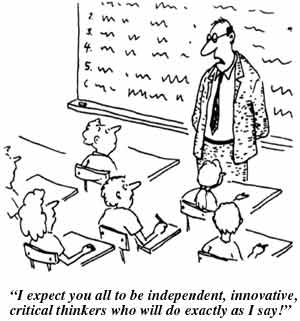
    It's also why I don't like arguing or debating. It's not that I don't have good opinions or interesting insights. I think a lot! I've got plenty! It's just that in an argument, particularly, even a friendly one, trying to follow the other person's line of thought while managing my own and trying to figure out when to respond to their point and when to propose mine is a lot of mental work--if you think about it, those who are able to do this easily are really amazing communicators! I can't formulate my ideas at the same time as I'm digesting the other person's. Which means I lose a lot of arguments. I don't "think on my feet" well. Many people like to assume they win an argument because they are able to speak more forcefully and confidently than their opponent, but this is not always the case. Confidence does not equal correctness. It just means they are better verbal communicators.
    This is why I also prefer writing to speaking. I can take my time to work on a problem or an argument or a topic and add the right details and evidence and background information. I can work at my own pace and I can go back and rework something if it's unclear or if I think of something to add.
    One thing I realized recently is that maybe I should not be looking for a position that requires me to answer phones or greet customers. I may be good at the other "introverted" parts of the position, working individually, organizing dates, projects, files, managing my time, but I am not as good at the "extroverted" aspects which require a more social aspect with strangers that makes me feel uncomfortable and like I am not being myself.
    Part 3 of this series will be focused on the book itself. Why people should read it, where it was really beneficial and where it was lacking. Still haven't decided if I'll do any additional commentary beyond that, but it's given me a lot to write about so far, so it's possible!
“Or at school you may have been prodded to "come out of your shell"- that noxious expression that fails to appreciate that some animals naturally carry shelter wherever they go, and that some humans are just the same.”

Sunday, October 23, 2011

Nostalgia Strikes Again

  Nostalgia, from the Greek, means a sense of pain, sadness or yearning to return to times gone by. It's not just homesickness or recalling fond memories, though it is often used in that sense. And although not everyone uses it in this way, I tend to use it to embody an entire era, one in which I had not even been born, rather than just memories contained within my own life.
    Sometimes I say I'm old-fashioned or conventional (more in my taste than in my actual ideas and opinions--in that case, vintage might be a more appropriate word), but mostly, or perhaps more accurately, I am nostalgic. I watch old movies and old television shows, and new movies and television shows that take place in that particular period of time, and I wonder why we thought it was necessary to evolve certain aspects of that culture into what we have today. Because today's culture is lacking some parts, parts that should have persisted, from that era. This has nothing to do with the technology overload or anything like that--I'm talking about our communication, interaction and the overall way in which we present ourselves on a day to day basis.
    I'll admit, I may be whistling dixie, and you can chalk a lot of this up to me having seen way too many episodes of The Dick Van Dyke Show and Mad Men, but there's something I really love about the fact that everything seemed so much more orderly and comme il faut about American life fifty or sixty years ago. These examples may have you scratching your head, wondering how I could call Dick Van Dyke in any way orderly and organized, or any of the characters' personal lives in Mad Men normal and as they should be, but there are things that exist in those shows that no longer exist.
    Today, everything is about comfort. We wear jeans to work (or we do where I work), nobody carries a proper hat or an overcoat, we all have sweatshirts and stocking hats when the weather calls for them, and we yell down the hall rather than politely phone someone in their office (though in my situation, not all of our phones are hooked up, so that one wouldn't be possible anyway).
    But it's not just what they wore. They had a certain way of acting--a politesse, at least outwardly, that has all but disappeared from the modern world. Some people might call it disingenuous, or phony, but it was correct--tactful, polite, and appropriate. It was being respectful and treating other people like they were people--not good or bad people, or well-liked people or disliked people, just human beings. There are things you can say in certain company, and there are things you absolutely don't say in certain company.  People held umbrellas for strangers and walked them to their cars. They held doors and elevators and didn't panic at the idea of saying "hello, how are you," to someone they happened to be stuck riding 10 floors up with.
    Back then, you kept your thoughts or opinions to yourself when it wasn't your place to speak up, and you addressed certain people with respect whether you liked them or not. While some of this propriety has managed to survive, at least in certain circles or for certain people, a lot of it has disintegrated. Lots of people now say whatever they want whenever, wherever, and to whomever they happen to be in the vicinity of.
    While this may seem more real and honest--qualities which have become more valuable over the years as politeness and respect have become less valuable for whatever reason--I still feel like there is a line somewhere that's being crossed. It's just that so many years have passed, and so many people have stepped on that line, that we can't quite see where it is anymore.
    Call me sentimental, but i think it'd be nice if everyone still wore suits and high heels and pencil skirts. The world would seem to me more civilized, less cutthroat and ugly, as the news inevitably portrays it. On the other hand, then I'd have to learn how to do my hair so it looked perfect all day. Maybe sweatpants, cursing like a sailor, and instant messaging are not so bad after all.
We're going back--back to the future, man!

Are there some customs or mannerisms you'd like to see make a comeback, 
or do I just need to get over the fact that I was born in the wrong part of the century?
Share in the comments.

PS: NaNoWriMo starts in eight days. Have you picked your topic yet?

Tuesday, July 19, 2011

Are Nice People Too Nice?

  Nice people make excellent doormats. Nice people let mean people get away with stuff they shouldn't. Nice people are too nice to trample other people's toes, or call you out on a mistake in front of other people, if they do it at all. I think the majority of people fall somewhere in between the truly nice people and the truly mean people. We don't take advantage of other people too often and we will put our foot (feet?) down when the occasion calls for it. But nice people just want to help everyone. They want to make everyone feel good. They want everything to end happily. Some people might call this kind of idealism and optimism weak or stupid, but I don't think it's either of those. Nice people are nice because they can't be any other way. But, herein we have the rub: how do we differentiate between truly nice people and phony nice people?
    The phony nice people are hard to spot. They put on such a good face for so much of their lives that they almost convince themselves they are nice. But the difference is that the phonies have ulterior motives. They aren't nice for niceness's sake--they're nice because they want the promotion or they want you to scratch their back someday when the karma comes around, or some other less than entirely altruistic reason. These people can sometimes be even worse than mean people because they may be manipulating you without you even knowing it.
    The real nice people, we know who they are, will do everything because they want to. Because they care. They'll always offer you a soda if they're getting one for themselves. They'll always hold the door. They always say "Gesundheit" or "bless you" when you sneeze. They worry for your soul escaping from your body when you have an allergy cold and can't stop sneezing. That's true compassion. They may get put down and laughed at, taken advantage of and overwhelmed, but they will keep doing what they're doing because they can't imagine saying no or making a misstep in their manners and overall kind and generous demeanor.
We also have the people who hate themselves for being so nice. They wish they could be mean. They wish they could exhibit some level of dominance and say no once in a while. These people worry too much about what others think. They know people think they're too yielding. They know people call them a doormat. But they can't help being nice. If you are a truly nice person, you should accept it, embrace it, and learn that most people appreciate someone who cares more than someone who can assert some authority.
    But are the nice people too nice? I can't stand morning people. Morning people are usually nice people. They're too cheerful at an hour that seems impossible to me to be cheerful during. Nice people tend to make me feel bad that I'm not that nice. But I don't care about the same things. I want to get along with people and I want people to like and appreciate me, but I'm not going to say "bless you" when you sneeze because that's one of those mannerisms or superstitions I never bought into. It's a sneeze, a few moments in your chest and out your nose and mouth. It's not your soul trying to escape. (The origin of saying bless you is because people used to--or still do, apparently--think your soul would escape when you sneezed if someone didn't bless you.) Sante or salud might make more sense--to your health, because yes, you're sick, that's why you're sneezing. But I digress, as usual.
    Even if morning people make me cringe a little bit sometimes, I'd still rather be around people that are too nice, genuinely or not, than people who suck. Clearly, I'm a little over-tired, and I probably rambled on a bit about something that mean not mean a whole lot in the grand scheme of things, but self-deprecation is not an attractive quality either, so I'll knock it off. Being nice is good karma, whether you believe in karma or not, and it's always preferable to being an asshole.
Just be yourself. Odds are, someone will like you in spite of it.

Etsy Addict: A Few of My Favorite Things